


Introduction
Ask any landlord what eats up the most mental energy in a given month, and a surprising number will say the same thing: chasing rent. Not managing it, chasing it. The reminder text that goes unanswered. The tenant who promises “by Friday” and doesn’t pay until the following Wednesday. The awkward phone call nobody wants to make. None of it is dramatic on its own, but multiply it across a handful of units or a full portfolio, and it becomes one of the most draining parts of the job.
What’s easy to miss is that late payments aren’t usually about tenants being unwilling to pay. Most of the time, they’re about friction. A rent check that has to be mailed. A payment portal that’s clunky enough that tenants put it off. No reminder until the due date has already passed. Landlords often assume late payments are a tenant problem, when in a lot of cases, they’re a process problem.
That distinction matters, because it means the fix isn’t stricter late fees or more phone calls. It’s removing the friction that causes the delay in the first place, and that’s exactly what automated rent collection is built to do.
Why Rent Actually Gets Paid Late
Before fixing late payments, it helps to understand where the delay usually comes from. It’s rarely one single cause.
No reminder before the due date. Many tenants aren’t avoiding rent, they simply forget, especially when payment isn’t automatic. A reminder that arrives after the due date has already passed doesn’t help much.
Payment friction. If paying rent means writing a check, finding a stamp, or logging into a clunky portal with a forgotten password, tenants delay simply because it’s inconvenient, not because they don’t have the money.
No visibility into payment status. When a landlord can’t easily see who’s paid and who hasn’t until the end of the month, follow-ups happen too late to prevent a payment from becoming officially overdue.
Inconsistent enforcement. If late fees or follow-ups are applied unevenly, tenants quickly learn that the due date is more of a suggestion than a real deadline.
Manual tracking errors. Rent logged in a spreadsheet by hand is only as accurate as the person entering it. A missed row or a mistyped date can make an on-time payment look late, or a late one look fine.
None of these causes require a difficult tenant. Most of them are simply what happens when rent collection depends on manual steps and human memory instead of a system built to handle it automatically.
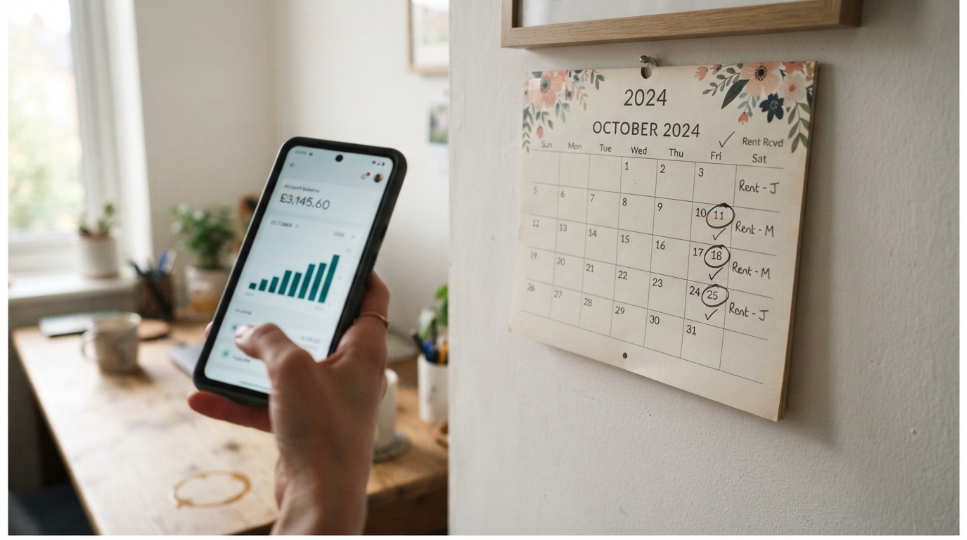
How Automation Fixes the Late Payment Problem
Automated rent collection doesn’t just move payments online. It removes the specific points of friction that cause delays in the first place.
Reminders go out before the due date, not after.
A tenant who gets a notification a few days ahead of time is far more likely to pay on time than one who only hears from the landlord once rent is already late.
Payment takes seconds, not steps
When tenants can pay directly from a link or an app instead of writing a check or navigating a clunky portal, the small excuse of “I’ll get to it later” mostly disappears.
Recurring payments remove the need to remember at all
Tenants who set up automatic payments stop being a source of late rent almost entirely, since the payment happens without anyone needing to take action each month.
Landlords see payment status in real time
Instead of waiting until the end of the month to find out who’s behind, a landlord can see exactly who’s paid, who hasn’t, and follow up while there’s still time to prevent a full late payment.
Late fees and follow-ups apply consistently
When the system tracks due dates and applies rules automatically, tenants can’t quietly learn that late payments go unenforced.
None of this requires being stricter with tenants. It requires making on-time payment the easiest option, which is usually all it takes.
What Better Cash Flow Actually Looks Like
The payoff of automated rent collection isn’t just fewer late payments. It’s a portfolio that behaves predictably from a financial standpoint.
- Income arrives on a consistent schedule. When most tenants pay automatically on or before the due date, a landlord can plan around rent arriving reliably instead of guessing when it will actually show up.
- Less time spent reconciling. Automated systems record payments the moment they happen, which means less time spent manually matching bank deposits to tenants at the end of the month.
- Fewer surprises at tax time. Consistent digital payment records make it far easier to produce accurate income reporting, instead of piecing together a year of rent from bank statements and memory.
- Better forecasting for larger portfolios. When payment timing is predictable across many units, it becomes realistic to plan maintenance budgets, mortgage payments, and reserve funds around actual expected income rather than rough estimates.
This is where a platform like Connflow fits directly into the picture. Rent collection, reminders, and payment tracking all happen in one system, tied to each property and tenant automatically, so landlords aren’t rebuilding a picture of their cash flow by hand every month.
Conclusion
Late rent is rarely a sign of a difficult tenant. More often, it’s a sign of a process with too much friction and too little visibility. A reminder that comes too late, a payment method that’s inconvenient, or a lack of clarity about who’s actually behind all quietly contribute to the same result: rent that arrives later than it should.
Automating rent collection doesn’t just fix the timing of payments. It gives landlords something harder to get from manual tracking: a clear, predictable picture of the income their portfolio actually generates, month after month.