


Introduction
The property management industry is evolving rapidly as technology reshapes the way landlords and property managers operate. In 2026, digital tools, automation, and data driven decision making are becoming essential for managing rental properties efficiently. Property owners who embrace these innovations can improve tenant satisfaction, reduce operational costs, and stay competitive in an increasingly demanding market.
Whether you manage residential apartments, commercial buildings, or mixed use developments, understanding the latest property management trends can help you prepare for the future.
Key Trends Shaping Property Management
Cloud Based Property Management
.Cloud platforms allow landlords and managers to access property information securely from anywhere. Tasks like lease management, rent tracking, maintenance requests, and reporting are centralized in one easy to use system
Smart Building Integration
Automation reduces manual work by handling recurring tasks such as rent reminders, lease renewals, maintenance scheduling, and financial reporting. This improves efficiency and minimizes errors.
Automation of Daily Operations
Routine tasks such as rent reminders, lease renewals, maintenance scheduling, and invoice generation can now be automated. Automation reduces manual work, minimizes errors, and allows property managers to focus on growing their business.
Data Driven Decision Making
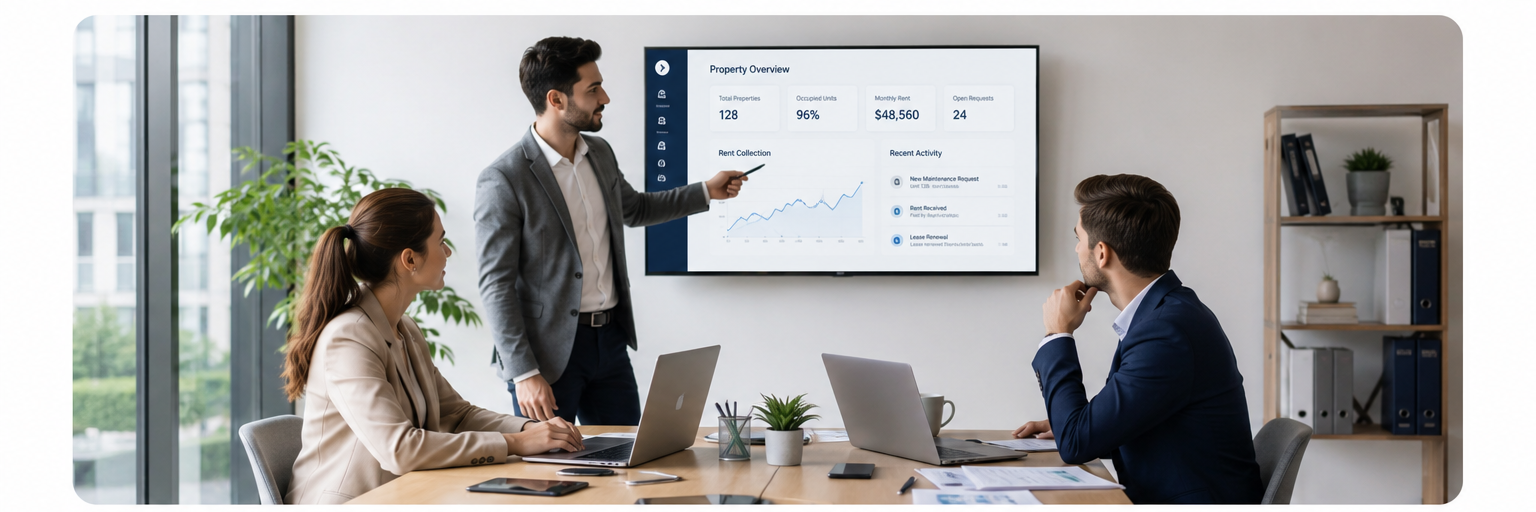
Analytics tools provide valuable insights into occupancy rates, rental income, maintenance costs, and tenant satisfaction. Property managers can use this data to make informed decisions and improve overall business performance.
Real World Use Case
Residential Property Management
Landlords can automate rent collection, handle maintenance requests, communicate with tenants, and securely store lease documents from a centralized platform.
Commercial Property Management
Property managers overseeing office buildings, retail centers, and commercial spaces can streamline lease administration, monitor financial performance, and manage multiple tenants efficiently.
Mixed-Use Developments
Managing residential and commercial properties together becomes much easier through centralized dashboards that simplify communication, maintenance coordination, and reporting.

Work harder & gain success
Technology is no longer just an advantage it has become an essential part of successful property management. Landlords who embrace digital transformation can reduce administrative burdens while improving tenant satisfaction and increasing profitability.
Following these best practices can help property managers achieve long term success:
- Automate repetitive property management tasks.
- Improve communication through tenant portals.
- Monitor property performance using real-time reports.
- Reduce paperwork with secure digital document storage.
- Schedule preventive maintenance to avoid costly repairs.
- Use cloud-based systems to manage properties from anywhere.
Manage Your Properties Efficiently
Efficient property management requires the right combination of technology, organization, and proactive planning. By adopting modern digital tools, landlords can simplify daily operations while providing a better experience for tenants.
Some of the most effective strategies include:
- Centralize lease agreements and property documents.
- Offer secure online rent payment options.
- Track maintenance requests in real time.
- Generate financial reports automatically.
- Monitor occupancy rates and rental income.
- Keep tenant communication organized through one platform.