



Introduction
A residential community isn’t a single rental unit with one landlord and one tenant. It’s dozens or hundreds of households sharing amenities, budgets, and rules a condo building, a gated subdivision, an HOA, or a multi-unit apartment complex. Managing one well means running finances, maintenance, communication, and compliance at once, for people who all expect a fast response and a fair process.
This guide walks through what that actually takes, step by step, and where the right tools save a manager from drowning in spreadsheets and phone calls.
What residential community management actually covers
Residential community management sits a level above standard property management. A property manager might focus on one building or one owner’s portfolio. A community manager is responsible for shared infrastructure and collective decision-making: common areas, reserve funds, board governance, resident disputes, and the day-to-day experience of everyone living there.
That distinction matters for search intent too someone searching “how to manage a residential community” is usually dealing with an HOA, a condo association, or a multi-building complex, not a single rented apartment. The responsibilities split roughly into five areas: governance, finance, operations (maintenance and vendors), communication, and compliance.
Why it matters
Well-run communities keep property values stable, retain residents longer, and avoid the disputes that end up in legal fees. Poorly run ones show up fast deferred maintenance, unpredictable dues, residents who stop trusting the board or the manager. Every section below exists to prevent that slide.
Set up clear governance and policies
Before anything else, a community needs documented rules everyone can point to: bylaws, covenants, a fee schedule, maintenance responsibilities (what the association covers vs. what owners cover), and a dispute process. Ambiguity here is where most conflicts start. If you’re managing on behalf of a board, put decisions and votes in writing and keep a record this becomes your audit trail later.
Build a real budget, not a guess
Dues and assessments need to cover three things: routine operating costs, a reserve fund for major repairs (roofs, elevators, paving), and a buffer for the unexpected. A community that underfunds its reserve ends up hitting residents with a large special assessment later, which is one of the fastest ways to lose trust. Review the budget annually against actual spend, and share a simple summary with residents transparency here does more for retention than any amenity does.
This is where financial reporting tools pay for themselves. Manually reconciling dues, late fees, and vendor invoices across dozens of units is where errors creep in; automated rent and dues collection with built-in financial reporting turns a monthly scramble into a dashboard check.
Get resident and owner onboarding right
Every new resident or owner should get the same clean onboarding: house rules, contact info, how to submit a maintenance request, how payments work. A confusing first month sets the tone for every interaction after. A self-serve resident portal for payments, documents, and requests removes a huge share of the back-and-forth a manager would otherwise handle by phone or email.
Put maintenance and vendors on a system, not a memory
Reactive maintenance waiting for something to break is more expensive than scheduled maintenance, and it erodes resident trust fastest when requests go unanswered. Two things make the difference:
- A ticketing system so requests are logged, assigned, and tracked to completion instead of living in a text thread.
- A vetted vendor list with contracts and response-time expectations, so you’re not sourcing a plumber during an emergency.
Connflow’s maintenance request and ticket management features handle exactly this requests get logged, routed to the right vendor, and tracked until closed, with a record you can pull up if a resident asks “didn’t I report this in March?”
Automate the money side
Late dues, missed rent, and manual invoicing eat manager hours that should go toward actually running the community. Automated rent collection, late-fee rules, and digital invoicing remove the awkward job of chasing payments by hand, and they give owners or board members real-time visibility into collections instead of a month-end summary.
Stay audit-ready, not audit-scared
Communities get scrutinized by boards, by new owners doing due diligence, by insurers, occasionally by lawyers. The fix isn’t more paperwork, it’s organized paperwork: leases and agreements stored centrally, an audit trail of who changed what and when, and documented compliance with local housing and safety regulations. Security and access controls matter here too financial and personal resident data needs the same protection you’d expect from any platform handling payments.
Handle conflict before it becomes a pattern
Noise complaints, parking disputes, rule violations these are routine, not exceptional. What separates a well-run community is a consistent, documented process: a clear channel to report issues, a response window, and fair enforcement of the same rules for everyone. Inconsistent enforcement is the single fastest way to turn a small dispute into a community-wide trust problem.
Keep communication proactive, not reactive
Residents shouldn’t have to ask what’s happening scheduled maintenance, upcoming votes, fee changes, and community events should go out before anyone has to inquire. A centralized communication hub that logs notices, announcements, and resident replies in one place also means a new manager or board member can see the full history instead of starting from zero.
Track the numbers that actually show performance
A handful of metrics tell you whether the community is healthy: occupancy or unit turnover, average maintenance response time, collections rate, reserve fund adequacy, and resident satisfaction. Reviewing these quarterly not just when something goes wrong is what separates management from firefighting. Current market trends in property management are worth checking periodically too, since benchmarks (fee ranges, expected reserve percentages, tech adoption) shift year to year.
Common mistakes worth naming
- Underfunded reserves the single biggest cause of painful special assessments.
- Inconsistent rule enforcement erodes trust faster than almost anything else.
- Maintenance requests tracked by memory or email things get lost, and lost requests become complaints.
- No self-service options for residents every simple question turns into a phone call.
- Spreadsheets across multiple tools finance in one place, maintenance in another, communication in a third. Nothing reconciles, and nothing scales past a handful of units.
Where software fits into all of this
Every step above can be run manually for a small community a dozen units, a simple shared spreadsheet. It stops working once a community grows past that, or once a board wants real accountability and audit-ready records. That’s the actual gap most “how to manage a residential community” guides skip: they describe the responsibilities but not how larger or growing communities actually keep up with them without adding headcount.
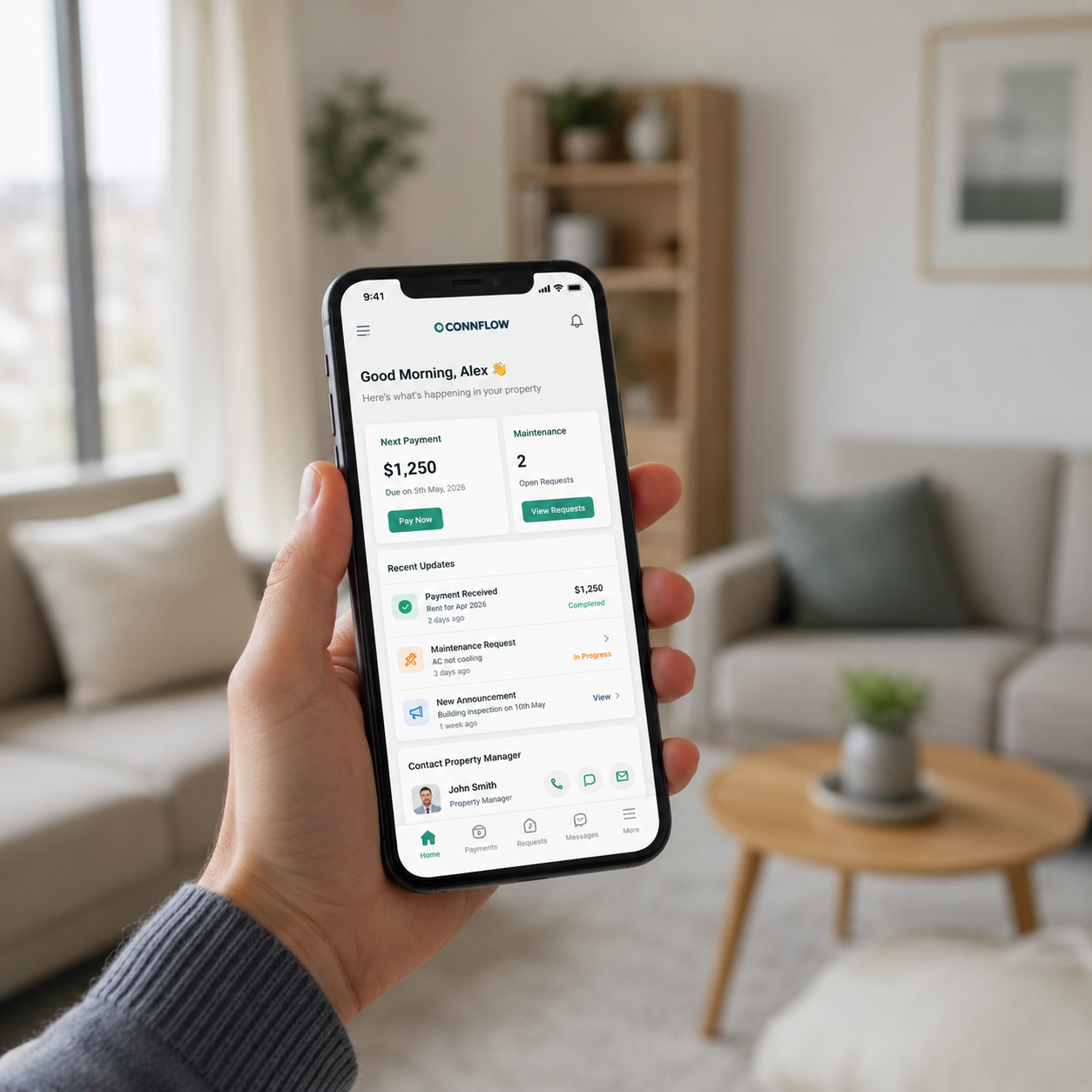
Platforms like Connflow bring tenant and owner management, automated rent and dues collection, maintenance ticketing, document storage, and financial reporting into one system so a manager isn’t reconciling five tools to answer one board question. It’s built to work whether you’re running a single enterprise portfolio or coordinating across property dealers and agencies, and Connflow’s own services team can help configure it around how your specific community actually operates rather than forcing a generic workflow.
Conclusion
Managing a residential community well comes down to five things done consistently: clear governance, a realistic budget, responsive maintenance, proactive communication, and audit-ready records. Do those five things and most disputes, surprise costs, and resident complaints never happen in the first place. Explore how Connflow supports each of these, or request a demo to see it against your own community’s workflow.